Payment methods sound like a boring back office detail until you have funds stuck in transit during a margin call. The channels you use to move money in and out of a forex account influence funding speed, cost, chargeback options, tax trail and even which brokers will accept you.
For the broker, payment rails are tied directly to risk and compliance. Every deposit option they offer has fraud patterns, chargeback rules and anti-money-laundering checks. That is why the glossy “instant deposit” button sits on top of a very cautious risk policy underneath.
For you as a trader the story is simpler. You want deposits to arrive quickly enough to keep the account fluid, withdrawals to leave without drama, and fees to stay low compared with your expected profits. On top of that, you want to know who sits between your bank and the broker, which intermediaries touch your money, and what records all those parties keep.
Once you break it down by payment type, the trade offs are easier to see. Bank wires bring traceability but can be slow. Cards are quick but messy on chargebacks. E-wallets and local methods can be fast, cheap and slightly opaque. Crypto adds extra volatility and custody risk on top.
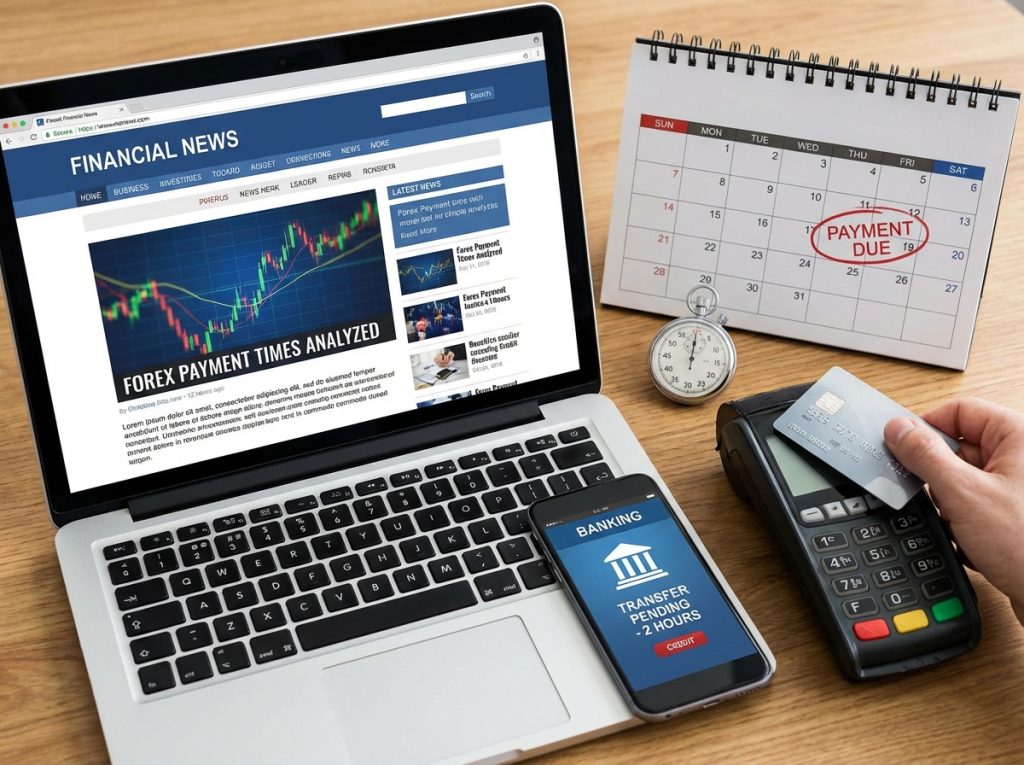
Bank wire transfers – still the backbone
Bank transfers are the oldest and still the most common method for moving larger sums to and from forex brokers. Even flashy brokers that promote cards and e-wallets will quietly tell you that serious funding usually happens by wire.
Domestic wires and SEPA style transfers
Inside a single country or currency bloc, bank payments can be relatively smooth. In Europe, SEPA transfers in euro between banks are often same day or next day. In some regions instant domestic transfers are standard, where money leaves your retail bank and shows up in the broker’s client account within minutes or a few hours.
For swing traders and investors funding four or five figure amounts, this method has two big comforts. The first is traceability. Every transfer carries your name, account number and a reference. If there is a dispute later, both your bank and the broker’s bank can reconstruct what happened. The second is regulatory comfort. Brokers under serious oversight are required to keep client money in segregated bank accounts, and bank transfers slot straight into that setup.
The obvious drawback is speed when things go wrong in the market. If you are under-funded during a wild move, a bank transfer that takes one or two days does not help much. Also, some banks still treat payments to forex and CFD brokers as higher risk, so their compliance team may question or delay larger transfers, especially on the way out.
Fees vary a lot here. Inside one country they are often tiny or zero. Cross-border even inside a region can incur flat fees or nasty spreads on currency conversion. Many traders only notice the conversion spread after checking the exact numbers in and out of the account, so it pays to compare the bank’s FX rate with a mid-market feed from time to time.
International SWIFT transfers and practical issues
When your bank and the broker’s bank are in different countries or currencies, payments usually travel over the SWIFT network. That means one or more correspondent banks in the chain, extra compliance checks and slower settlement.
In practice, an international deposit can take anywhere from one to five business days to reach the trading account, especially if it crosses time zones and intermediate banks. That is why brokers often ask you to upload a payment confirmation so they can match it more easily once funds land in their account.
International wires also bring intermediary bank fees. You send a neat round amount, and the broker receives a slightly lower figure because a middle bank took a charge on the way. Some brokers absorb that gap on deposits, others do not. On withdrawals, many pass those network fees directly on to the client.
On the upside, once the money is held at the broker’s bank in a reasonably regulated country, you have a clear paper trail from your account to theirs. If a broker ever claims not to have received a transfer, you can ask your bank for a SWIFT trace and use that to push the issue. It is not fun, but it is at least possible.
Card payments – Visa, Mastercard and friends
Card deposits are the headline feature on most retail forex landing pages. “Fund in minutes” with a familiar brand logo feels safe and convenient, especially if you have not wired money internationally before.
How card deposits work at forex brokers
When you deposit with a credit or debit card, the broker runs the payment through a card processor or payment gateway. From your point of view it looks exactly like any online purchase. The amount is authorised and captured. Your trading account balance updates almost instantly.
Behind the scenes, the broker is dealing with card scheme rules, fraud checks and chargeback risk. Card networks classify forex and CFD activity as high risk in many regions. That translates into higher processing fees and stricter limits on what brokers can accept. Some issuers block card payments to offshore brokers outright, or treat them as cash advances.
Many brokers only allow withdrawals back to the same card up to the amount of deposits, with excess profit sent by bank transfer or another method. That is partly about anti-money-laundering rules and partly about chargeback management. The refund path through card schemes is designed for reversing purchases, not for paying out trading profits.
Card deposit limits are usually lower than wire transfer ones. They suit initial funding for small accounts or topping up after losses, not shifting six figures of trading capital.
Chargebacks, fraud risk and broker limits
Cards give you a unique power as a client: the right to dispute transactions through your card issuer. If a broker refuses to pay out deposits or behaves dishonestly, some traders turn to chargebacks as a last resort. Issuers then ask the broker for proof, and in some cases money flows back to the cardholder.
Brokers, understandably, hate abusive chargebacks where someone trades, loses, and then claims the deposit was fraudulent. To manage that risk, many firms treat card funding as higher risk money. They may enforce longer cooling-off periods on withdrawals of card funded accounts, request extra identity checks, or refuse cards from certain regions entirely.
From your side, card payments are best treated as a convenience layer, not the foundation for the whole funding plan. They are fast, familiar and reversible, but fee levels, cash-advance classification and limits can change without much notice. Banks sometimes change their policy on carding to offshore brokers overnight and transactions then start failing for reasons that support staff at either end struggle to explain clearly.
E-wallets and online payment systems
E-wallets such as Skrill, Neteller, PayPal in some regions, and various regional wallets, have long been popular with active traders. They sit somewhere between cards and bank transfers in terms of feel and behaviour.
Speed and convenience for active traders
With an e-wallet you hold balances inside a payment provider and link those balances to your bank or card accounts. Deposits to a broker funded from a wallet are usually instant or near instant. Withdrawals back to the wallet are often faster than bank wires, with lower flat fees.
For traders who move money between several brokers, e-wallets can act as a hub. You pull profits out of one broker, hold them in the wallet, then route them into another account. You avoid repeat card charges and some of the friction on cross-border bank transfers. In practice, many short-term forex and CFD traders rely heavily on one or two wallets to manage float.
Some e-wallets also support a wide range of currencies, which reduces conversion costs if you trade in different account bases. Holding a euro balance and a dollar balance separately in the same wallet can be cheaper than letting a card issuer convert every transaction on the fly at their own spread.
KYC, limits and regional quirks
Because e-wallets are subject to the same anti-money-laundering expectations as banks, they perform their own know-your-customer checks. Over a certain threshold, you will be asked to upload identification, proof of address and sometimes income or business details. Until that is done, deposit and withdrawal limits can be quite low.
In some countries, rules or provider policies restrict wallet use for high-risk trading activity. PayPal, for example, historically has been fussy about FX and CFD broker relationships, and availability varies widely by country and broker. Skrill and Neteller have catered more openly to high frequency trading and betting sectors, which brings convenience but also higher scrutiny from regulators.
E-wallets themselves are another counterparty on your chain. If a provider freezes your account due to a compliance review, your trading capital may be locked there rather than at the broker or your bank. That is rare for clean accounts, but it is a risk you add every time you introduce another intermediary.
For tax and record keeping, wallet statements help, but they are one more set of records to keep in sync with broker statements and bank reports. Small traders often ignore this until their first serious audit or income review and then regret the extra work.
Local payment methods and instant bank transfers
Beyond the big global methods, forex brokers now lean heavily on local payment options in different regions. These methods often sit on top of local banking rails but look and feel like separate products.
Regional rails and “alternative” methods
In some European countries, online instant bank payment systems let you approve a broker deposit straight from your banking app without entering card data. In parts of Asia, brokers plug into local QR code payment networks, domestic online banking gateways or mobile wallets tied to telecom companies. In Latin America or Africa, cash-in networks and local bank APIs fill the same role.
From the trader’s chair, these local methods are often fast, cheap and familiar. You see your own language, local currency, and a chain of banks and processors that already handle other bills in your daily life. That lowers the psychological hurdle to funding an account compared with, say, wiring money to a bank in another continent.
Some brokers also partner with third party processors that specialise in certain regions. You deposit through a local fintech brand and the processor aggregates funds and forwards them to the broker’s main bank accounts. That gives the broker reach in markets where direct card or bank integration would be slow or too expensive.
Good examples of popular local alternatives are African mPesa and AirTel. Both are popular in Kenya, Nigeria and the rest of Africa.
What a trader needs to check here
Local methods can be handy, but they add complexity slightly hidden behind the comfortable interface. Several extra questions become worth asking.
You want to know whether the payment goes directly into an account in the broker’s name or through an intermediate collector. If the receipt mentions a different company, that entity is part of your counterparty chain.
You also want to understand the refund and dispute rules. Some instant bank payments are one-way. Once authorised, they cannot be reversed the same way a card payment can. That means any refund must be handled by the broker as a manual bank transfer, with the usual delays and record checks.
In some regions, local methods are tied to looser regulation of cross-border flows. That can be convenient when moving money out of a country with strict capital controls, but it raises questions about compliance risk. If a government later decides those flows broke the rules, you do not want your name in the logs without having at least understood the stakes.
Crypto and stablecoin payments
Plenty of forex brokers now offer funding and withdrawals via crypto currencies, stablecoins or both. On the surface that looks modern and flexible. Underneath, it is a bundle of extra risk layers that you need to treat with some respect.
Depositing and withdrawing in digital assets
When you fund an account in bitcoin, ether or a stablecoin, the broker shows you a wallet address on a supported network. You send funds from your own wallet or from an exchange. After a certain number of confirmations, the broker credits your trading balance, often in a chosen fiat currency or in the same token.
Withdrawals reverse the process. You submit a request with an address, the broker runs through their checks, and funds leave their wallet after a processing period. Network fees and congestion affect both speed and cost.
One appeal here is that crypto transfers do not run through the traditional banking system. That can be helpful for clients who live in countries where card issuers and banks are hostile to offshore trading, or where capital controls are tight. It can also give faster cross-border movement than some bank routes.
Stablecoins cut out most of the price volatility at the token level, while still using the same rails. That makes them a popular bridge asset between brokers and exchanges.
Extra risks and what can go wrong
Crypto payments are typically harder to reverse than card or even bank transfers. A wrong address, wrong network or compromised wallet can lead to permanent loss. Many brokers warn that they will not replace coins sent to the wrong chain or wrong token contract.
There is also pricing and conversion risk. If you deposit bitcoin and the broker converts it to dollars at their own rate, then later convert back on withdrawal, the combination of market moves and spreads can produce surprises. You might think you “broke even”, but the number of sats or tokens on the way out tells a different story.
Stablecoins have their own hazards. They depend on the issuer’s reserves and legal structure. If a stablecoin used by your broker runs into regulatory trouble or a loss of confidence, the peg can slip. Suddenly your “cash equivalent” funding is worth less in real terms, even before trading losses.
Finally, some banks and tax authorities treat crypto-related flows with extra suspicion. A chain of deposits that goes bank → exchange → forex broker, then comes back broker → exchange → bank, may trigger more questions than a simple wire. Keeping clean records for every hop becomes important, even if it feels fussy at the time.
Internal transfers and non-standard flows
Beyond standard deposits and withdrawals, forex traders often move funds between accounts and brands. That usually happens through internal transfers rather than full payment flows.
Moving money between accounts and brands
Within a single broker, you may have several trading accounts in different currencies or platforms. Internal transfers let you shift balance between them instantly, sometimes with a small conversion fee if you move between base currencies. Swing traders use this to separate strategies, test new platforms or ring-fence higher risk activity.
Some brokers also offer “wallet” structures where you hold a master balance at group level and push funds into and out of individual accounts. That gives you a central cash pool and reduces how often you have to touch external payment methods.
Between different brands under one group, there may be semi-internal transfers. A broker might allow a transfer from their EU entity to their offshore entity via an internal ledger adjustment, rather than forcing you to withdraw and redeposit. While convenient, that kind of move blurs regulatory lines and should be understood clearly before you rely on it.
Introducing brokers and prop firms add another angle. In some setups, your “trading account” sits at the prop firm, which then settles net PnL and payouts periodically through standard channels. In others, you have a direct broker account and the IB just receives commission. Reading the exact payment and settlement structure is dull but pretty important if you plan to operate size.
Choosing the right payment mix for your trading
At the end of all that, you are left with a menu rather than a single “best” method. The sensible move is to match payment types to your needs instead of forcing one method into every situation.
Speed, cost, traceability and safety
If you fund large amounts infrequently and care most about audit trails and regulatory comfort, classic bank transfers make sense. A domestic or SEPA transfer into a regulated broker’s client account might not be glamorous, but it leaves a clear paper trail and sits comfortably with most banks and accountants.
If you run smaller accounts, top up more often and trade actively, cards and e-wallets help. Card deposits are handy for quick funding before a trading week; e-wallets are better as a traffic hub between brokers. Just keep card limits, cash-advance rules and wallet KYC in mind so you are not surprised by a sudden block.
Local methods help when you live in a country where international transfers are awkward, but they also introduce extra intermediaries. A small test transaction and careful reading of how refunds work can save you stress later.
Crypto and stablecoins sit at the high-flexibility, high-responsibility end. They solve some access issues and can be fast and cheap, but you take on correction-proof transfers, token risk and extra regulatory attention. Most traders do better starting with fiat rails and adding crypto later once they are comfortable managing wallets and on-chain mistakes.
One last habit makes all of this easier. Treat payment behaviour as part of your trading plan rather than an afterthought. Decide which methods you use for deposits, which for withdrawals, what minimum balance you keep at the broker, and how often you reconcile statements from bank, wallet, broker and any exchanges in the middle. Money that reaches the trading account is only part of the story; how cleanly it moves back out again is the real test of whether the whole setup works for you.