Financial scams do not usually look like scams at the start. That is the problem. They look like brokers, trading apps, investment groups, account managers, crypto platforms, recovery agents, private funds, signal services, or a person on social media who appears to understand markets better than the average loudmouth with a ring light.
For traders and investors, this matters because scam risk is not separate from trading risk. It sits beside it. A trader can manage position size, respect stop losses, follow a process and still lose money by sending funds to a fake broker. An investor can understand asset allocation and still get caught by a cloned firm offering bonds, private equity, crypto yield, or a “protected” portfolio that does not exist.
The DayTrading.com safety guide is a useful starting point because it treats safety as part of the trading process, not as a polite warning at the end. That is the right framing. Before money reaches any trading venue, a trader should know who runs it, who regulates it, how withdrawals work, what protections apply, and whether the firm’s contact details match official records.
The risk has grown because scams now copy real finance more closely. A fake broker can display real prices. A cloned firm can copy a legitimate license number. A crypto scam can use real blockchain language. A fake trading group can use real market news. The scam is not always in the vocabulary. It is often in the payment route, the withdrawal block, the false authority, or the pressure to act before checking.
Financial scams punish speed. They reward the victim’s hope, impatience and embarrassment. The safest response is not paranoia. It is boring verification before the deposit, and fast reporting after suspicion.
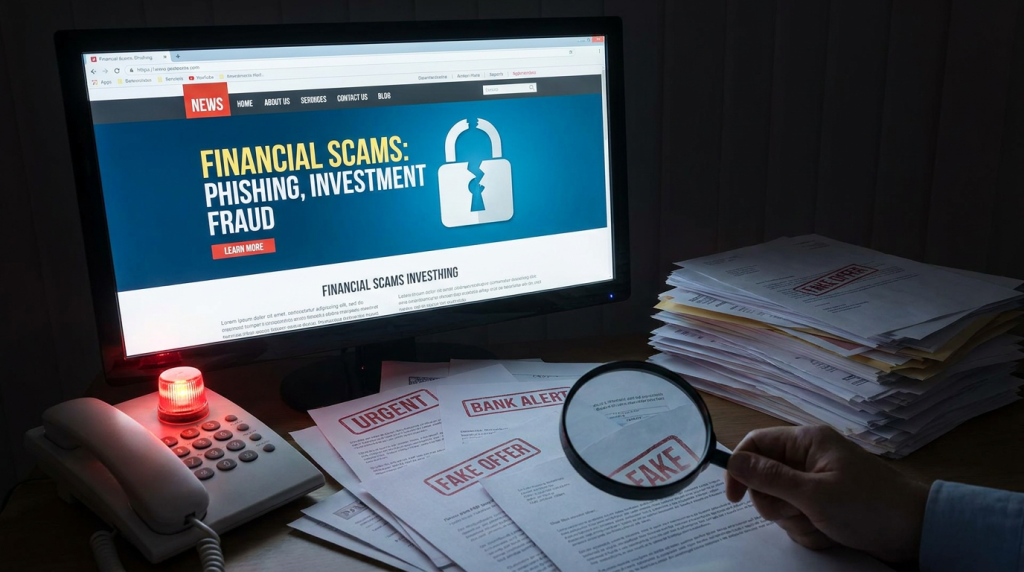
Why Financial Scams Still Catch Traders
Traders are not easy targets because they know nothing. Often, they are targeted because they know enough.
A beginner may not understand leverage, spreads, custody, margin, exchange execution, staking, token liquidity, structured notes, CFDs, binary options, options chains, managed accounts or broker regulation. That lack of knowledge is risky, but it can also make the person cautious. A trader with basic knowledge may understand enough terms to feel comfortable. That comfort can become the opening.
Scammers use the language of legitimate markets. They talk about arbitrage, liquidity, institutional flow, portfolio hedging, private allocation, AI execution, copy trading, staking yield, smart contracts, market maker rebates, prime broker access, and regulated custody. Some of those words belong in real finance. That is why they work. A scam does not need fake vocabulary. It only needs real vocabulary attached to a false claim.
The Federal Trade Commission’s investment scam guidance warns that scammers often promote investments with promises of high returns, little risk and little effort. That pattern is old, but it still works because it fits what people want to hear. The trader wants an edge. The investor wants a strong return. The scammer sells certainty in a market that does not provide it.
Urgency is the next part. The trader is told the offer closes today, the private group is nearly full, the broker bonus is expiring, the token listing is coming, the account manager has a short window, or the recovery payment must be made before funds are released. Time pressure matters because due diligence is slow. A person who checks the legal entity, regulator, domain name, payment account, withdrawal terms and public warnings is harder to steal from. So the scammer makes checking feel costly.
There is also the fear of missing out. Traders know that markets can move quickly. They have seen stocks gap, crypto tokens run, indices squeeze, commodities spike and currencies move hard after data. Scammers borrow that memory. The message becomes simple: you missed the last one, do not miss this one.
The emotional pitch is often more important than the financial pitch. A person who has recently taken losses may be offered recovery. A person who wants independence may be offered easy trading income. A person who trusts a well known brand may be shown a cloned website. A person who respects a public figure may be shown a fake celebrity endorsement. Fraud works because it attaches itself to existing beliefs.
The U.S. Securities and Exchange Commission’s investor education site tells investors to investigate independently and not rely only on information from the seller in its guidance on avoiding investment fraud. That advice is dry, but it is good. Asking the person selling the investment whether it is safe is not due diligence. It is customer service for the scammer.
Broker Clone Scams And Fake Trading Platforms
Broker clone scams are among the most dangerous forms of financial fraud because they borrow credibility from real firms. The scammer does not need to invent a respectable brand. They copy one.
A clone scam may use the name, logo, address, license number, staff names or website design of a legitimate broker or investment firm. The victim searches the name, finds a real regulated company, and relaxes. That is the trap. The question is not only whether the firm exists. The question is whether the website, email address, phone number, payment account and legal entity match the real firm’s official details.
This guide to broker clone scams explains how fraudsters imitate legitimate brokers and use copied details to make fake operations appear trustworthy. This type of scam works because the victim often performs one check, sees a familiar company name, and stops before checking the details that matter.
The difference between a real broker and a clone can be small on screen and huge in practice. A domain may contain one extra word. An email address may use a different ending. A phone number may not match the regulator’s register. A payment instruction may point to an unrelated company. A support agent may use WhatsApp instead of the firm’s official channel. These details look minor until money is gone.
Fake trading platforms use a similar trick, but they do not always copy a real firm. Some create a brand from scratch. They show live charts, account balances, trade history, customer support, market news and withdrawal pages. The site may look cleaner than some legitimate brokers, which is annoying but true. Web design is cheap. Regulation is not.
The fraud often follows a pattern. The trader deposits a small amount. The platform shows gains. An account manager calls or messages with confidence. The trader is encouraged to deposit more. The balance grows again. At some point, the trader requests a withdrawal. That is when the story changes.
The platform may demand tax, compliance clearance, anti money laundering release, wallet activation, liquidity fees, account upgrading, trading volume completion, settlement charges or margin repair. The fee must be paid before funds are released. Then another fee appears. The trader is not dealing with a slow broker. They are inside a payment loop.
Real brokers can charge fees, ask for identity documents and delay withdrawals during compliance reviews. That does not automatically prove fraud. But a demand for fresh deposits before releasing existing funds is a serious warning sign. A legitimate fee can usually be deducted from the account balance under clear terms. A fake fee is often payable only through a new transfer, because the displayed account balance is not real money.
The SEC page on binary options fraud notes that complaints about internet based trading platforms have included manipulated software, distorted prices and payout issues. Although that page focuses on binary options, the wider lesson applies across fake trading platforms. When the platform controls the screen, the user may be watching theatre rather than trading.
Traders should also understand the difference between a bad trade and a fake platform. A real broker can offer risky products where customers lose money. That is not automatically fraud. A trader can lose on forex, CFDs, options, futures, crypto or equities because the market moved against them. Fraud enters when the firm lies about regulation, fabricates balances, blocks withdrawals, manipulates account data, impersonates another firm, or pressures customers into repeated deposits under false claims.
The hardest part is admitting the platform may be fake after money has already been sent. Scammers know that. They keep the victim engaged by showing a large balance and promising that one more payment will release it. The balance becomes emotional bait. The victim is not paying because they trust the platform. They are paying because they want the displayed number to become real.
That is why broker verification must happen before funding. After funding, the trader is negotiating with hope.
Social Media, Signal Groups And Fake Authority
Social media has made financial scams cheaper to run and easier to scale. A fraudster can create an account, copy photos, post market comments, edit profit screenshots, buy engagement and push users into private groups. The setup can look active in a few hours. Not good, just active. There is a difference.
The funnel is familiar. A post promises easy returns, private signals, an AI trading tool, crypto profits, funded account access, a high win rate strategy, or a private investment opportunity. The viewer is moved into direct messages, then into a Telegram, WhatsApp or Discord group. Inside the group, members post winning trades, thank the mentor, show withdrawal screenshots and praise the system. Some are fake accounts. Some may be victims who still believe the platform is real. Either way, the group creates pressure.
The FINRA red flags guidance tells investors to watch for pressure, exaggerated claims, account problems and other warning signs. That matters because social media scams often create a room where pressure feels like consensus. A weak claim looks stronger when dozens of accounts repeat it.
Signal groups are not automatically scams. Some are poor education. Some are marketing funnels. Some are honest but not very good. Some are outright fraud. The risk is higher when the group pushes users toward a specific broker, requires deposits through an account manager, blocks questions, claims guaranteed returns, or tells members not to discuss the opportunity outside the group.
Fake authority is another common tool. Scammers impersonate analysts, brokers, regulators, trading educators, lawyers, celebrities and recovery specialists. They may use stolen profile photos and near identical usernames. A trader who follows a real commentator may receive a message from a fake account offering private coaching or managed trading. The real person has no connection to it. The scammer is using borrowed trust.
The same principle applies to fake regulator claims. A scammer may say the firm is licensed, certified, globally approved, registered with a private financial authority, or protected by an international investor scheme. These words sound official but often mean little. The only useful check is the official register of the relevant regulator, including permissions and contact details.
Traders should be careful with screenshots. A profit screenshot is not audited performance. A withdrawal screenshot is not proof that other customers can withdraw. A dashboard balance is not proof of custody. A comment section is not due diligence. Screenshots are easy to fake and easier to misunderstand.
Social media is useful for discovering ideas, not verifying trust. A chart can start research. A post can introduce a market theme. A video can explain a concept. None of these should decide where money is deposited. The trust layer belongs elsewhere: regulator registers, legal documents, official websites, payment details, withdrawal terms and independent checks.
Crypto, Payment And Recovery Scams
Crypto has given scammers a fast payment route and a useful vocabulary. That does not make all crypto activity fraudulent. It does mean crypto payments are common in modern financial scams because they can move quickly, cross borders easily and may be difficult to reverse.
The FBI guidance on cryptocurrency investment fraud describes schemes where victims are persuaded to send funds into fake investment platforms controlled by criminals. The victim may see profits on screen, but the money has already gone to the scammer’s wallet.
A common crypto scam begins with trust building. The scammer may meet the victim through social media, a messaging app, a dating platform, a professional network or even a wrong number text. The conversation may continue for days or weeks before trading is mentioned. By the time the platform appears, it feels like advice from someone familiar rather than a pitch from a stranger.
The fake platform may show crypto balances, staking income, mining revenue, liquidity pool returns or trading profits. The victim is encouraged to add more funds. When withdrawal is requested, the platform demands tax, gas fees, wallet verification, node activation, anti money laundering approval, smart contract release or liquidity unlocking. Some of these terms resemble real crypto mechanics. That is why they are useful to criminals. Real words can still be used in fake demands.
Wallet scams work differently. Instead of depositing into a fake account, the victim may connect a wallet to a malicious website, sign a harmful approval, reveal a seed phrase, scan a fake QR code or install remote access software. Once control is given away, assets can move fast. No legitimate exchange, wallet provider, broker or regulator needs a seed phrase. Anyone asking for it is not helping.
Payment method is often a major clue. A supposed broker may ask for bank transfer to an unrelated company, payment through a personal account, gift cards, payment apps, or crypto transfers to a wallet. A genuine financial firm should have clear payment instructions tied to the legal entity providing the service. If the money trail does not match the story, the trader should stop.
Recovery scams deserve their own warning because they target people who have already been hurt. A victim loses money to a fake broker or crypto platform. Later, someone contacts them claiming to be a lawyer, investigator, blockchain analyst, regulator, bank officer, or recovery specialist. They say the funds have been traced and can be returned, but first the victim must pay a fee, tax, bond, wallet activation charge or legal release.
This guide to recovery scams explains how fraudsters target scam victims again by promising to recover lost funds. This second scam often works because the victim is tired, embarrassed and desperate to undo the loss. The emotional state is exactly what the recovery fraudster wants.
Real recovery work can exist in some cases through banks, law enforcement, regulated legal processes or forensic specialists. But guaranteed recovery for an upfront fee should be treated as a major warning sign. Anyone asking for seed phrases, wallet access, secrecy from police or another payment to unlock funds is not recovering money. They are continuing the extraction.
The ugly rule is useful: once a scammer knows someone has paid once, that person may be marked as likely to pay again. Victims need to treat every follow up contact with suspicion, especially when it arrives with urgency and promises.
Red Flags Before Sending Money
The clearest red flag is a promise of high returns with little or no risk. Markets can reward risk. They do not remove it because a stranger on the internet says so. A fixed high return, guaranteed weekly profit, protected trading strategy or no loss account should trigger caution immediately.
The second red flag is urgency. Scammers want the victim to act before checking. The offer expires today. The account must be upgraded now. The withdrawal fee must be paid before the deadline. The group is closing. The signal is live. Serious traders do act quickly in markets, but they do not send capital to unverified firms because someone pressures them in a chat window.
The third red flag is vague regulation. A firm that claims to be registered or licensed without providing a precise legal entity, regulator, license number and official register entry is giving fog. Company registration is not the same as financial authorisation. A certificate uploaded to a website can be copied. A real licence should be checked through the regulator’s own site.
The fourth red flag is mismatched payment details. If the firm name, bank recipient, payment processor or wallet does not match the investment provider, the trader needs a clear explanation before sending anything. In most scam cases, the explanation will be a pile of technical words covering a simple fact: the money is not going where the marketing says it is going.
The fifth red flag is withdrawal friction. Delays can happen at real financial firms. Repeated demands for fresh deposits before release are different. A tax fee, compliance fee, wallet fee, insurance fee or liquidity fee that cannot be deducted from the balance is not normal. It is a warning.
The sixth red flag is secrecy. Scammers often tell victims not to speak with banks, advisers, friends or family. They may claim outsiders do not understand, banks block profitable investments, regulators are behind the times, or critics are jealous. This is not independent thinking. It is isolation.
The seventh red flag is fake proof. Luxury photos, testimonials, comments, profit screenshots, withdrawal screenshots and dashboard balances are weak evidence. They can be staged, edited or generated. If performance is real, it should survive proper documentation and independent checks.
The eighth red flag is remote access. A broker, adviser, exchange support agent or recovery specialist should not need full control of your device to help you deposit, trade, verify, pay tax or withdraw. Remote access can expose bank accounts, emails, trading accounts, identity documents and crypto wallets. In plain English, it gives a stranger the keys.
The ninth red flag is emotional handling. The scammer flatters, pressures, shames or reassures depending on what gets the next payment. The victim is called smart when they agree and fearful when they hesitate. Real professionals may be persuasive, but they do not need emotional wrestling to answer basic questions.
The tenth red flag is complexity that always ends with a payment request. If every question produces more jargon and another fee, the problem is not sophistication. It is evasion.
Practical Checks Before Trusting A Firm
The first check is the legal entity. The brand on the website is not enough. The trader needs the exact company name in the client agreement, terms of business and payment details. A financial group may have several entities under the same brand, and protections can differ sharply between them.
The second check is authorisation. Use the official register of the relevant regulator and compare the firm name, licence number, permitted activities, official website, email address, phone number and physical address. Similar is not good enough. Clone scams rely on small differences.
The third check is product permission. A firm may be registered for one activity but not authorised to provide the product being sold. A company may be allowed to offer payment services but not investment advice. It may be regulated in one country but not allowed to serve retail clients in another. The question is not just “does this firm exist?” It is “is this firm allowed to offer this product to me?”
The fourth check is withdrawal terms. Traders often focus on spreads, leverage, markets, charting tools and bonuses. None of that matters if funds cannot be withdrawn. Read the terms around fees, processing times, identity checks, bonuses, account tiers and dormant accounts before depositing.
The fifth check is the payment route. The recipient should match the legal entity or a clearly disclosed custodian or payment processor. Payments to individuals, unrelated companies, crypto wallets or informal accounts should be treated as high risk.
The sixth check is independent complaint history. Reviews are imperfect. Some are fake. Some are angry but fair. Some are written by competitors. The goal is not to believe every review. The goal is to spot repeated patterns such as blocked withdrawals, bonus traps, pressure calls, identity misuse, cloned details and unexpected fees.
The seventh check is communication. A serious firm should provide written answers to basic questions about regulation, fees, custody, withdrawal and complaints. If everything must be discussed over phone calls or disappearing messages, that is useful information.
The eighth check is account security. Use unique passwords, multi factor authentication, withdrawal allowlists where available and separate email addresses for financial accounts. Do not share one time codes. Do not upload more identity documents than required. Do not store seed phrases in screenshots, email drafts or cloud notes. That last one is not secure because the folder is called “tax stuff.”
A good rule is simple. No verification, no deposit. A missed trade is survivable. A fake broker holding your capital is less charming.
What To Do After Suspected Fraud
If fraud is suspected, stop sending money immediately. Do not pay the withdrawal fee, tax fee, wallet activation charge, upgrade cost, recovery fee or compliance bond. Scammers often keep victims engaged by presenting one final step. There is rarely only one.
Save evidence before confronting the scammer. Take screenshots of dashboards, balances, trades, chats, emails, phone numbers, names, wallet addresses, transaction hashes, bank details, payment receipts, documents and websites. Export chat logs where possible. Fraud sites disappear and accounts get deleted.
Contact the bank, card provider, exchange or payment app used for the transfer. Ask whether the payment can be stopped, recalled, disputed, frozen or flagged. With crypto transfers, recovery is harder, but fast action can still matter if funds move through a compliant exchange.
Report the fraud through official channels. In the U.S., cyber enabled fraud can be reported through the FBI Internet Crime Complaint Center. Securities related concerns can be reported through the SEC complaint process. Broker related issues can be reported through FINRA’s complaint process. Consumer fraud can be reported through the FTC fraud reporting portal. Traders in other countries should use their national financial regulator, cybercrime agency and consumer protection body.
Be careful with recovery services. A person who has already been scammed may be contacted by a second scammer claiming to help. Guaranteed recovery, upfront fees, seed phrase requests and secrecy from authorities are all warning signs.
Tell someone trusted. Fraud thrives on embarrassment. A second person can help stop payments, organise evidence and judge the situation without the same emotional pressure.
Final Warning
Financial scams work because they make false trust feel normal. They copy broker brands, trading language, regulator badges, social proof, crypto mechanics and professional manners. They do not need to fool everyone. They only need to move a victim from doubt to deposit.
A real firm can be verified. A real broker can answer written questions. A real investment can explain risk. A real withdrawal process does not require endless new payments.
Traders and investors already face enough market risk. Adding fake counterparty risk is optional, and usually expensive. Slow down before sending money. Check the entity. Check the payment route. Check the regulator. Question the promise. In scam prevention, the boring work is often the profitable part.